

Discover Vahdam® India’s Matcha Collection – Pure Japanese Matcha Green Tea. Perfect for Lattes, Smoothies, Baking, or Traditional Preparations. Smooth Taste and Vibrant Color.
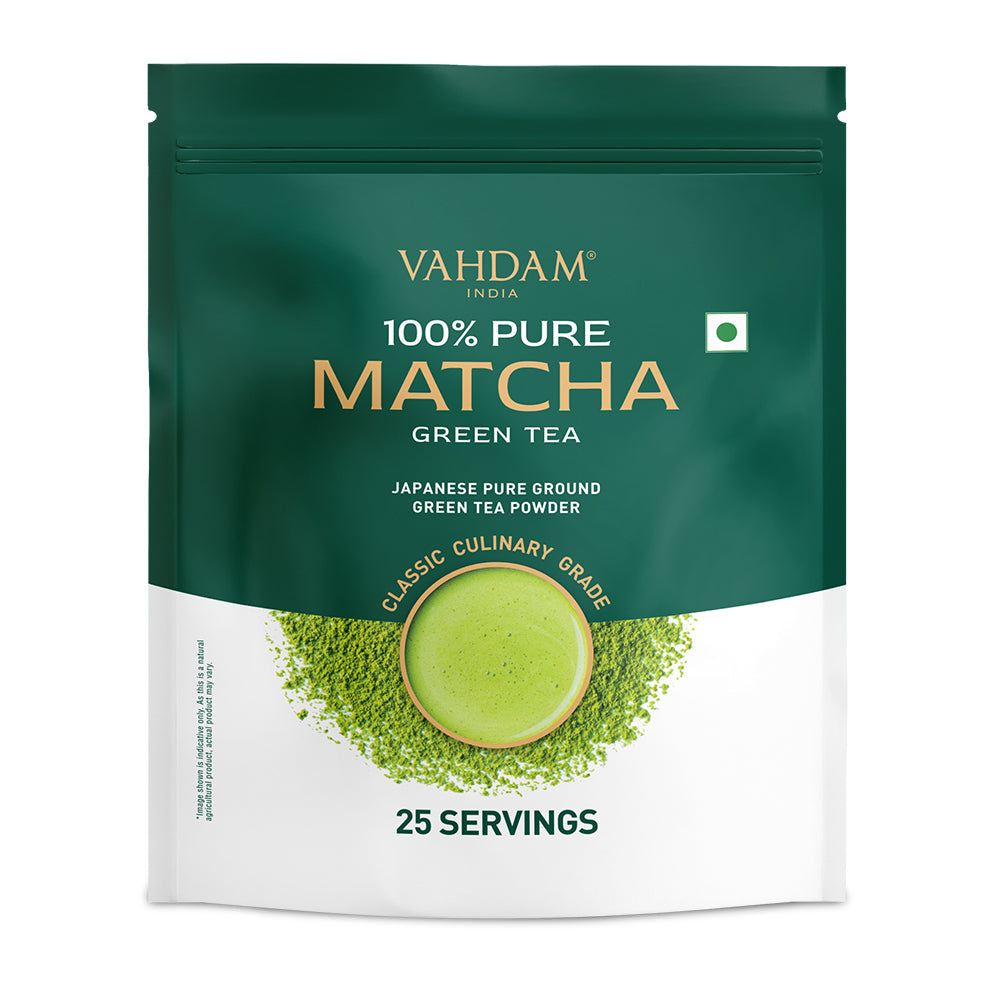
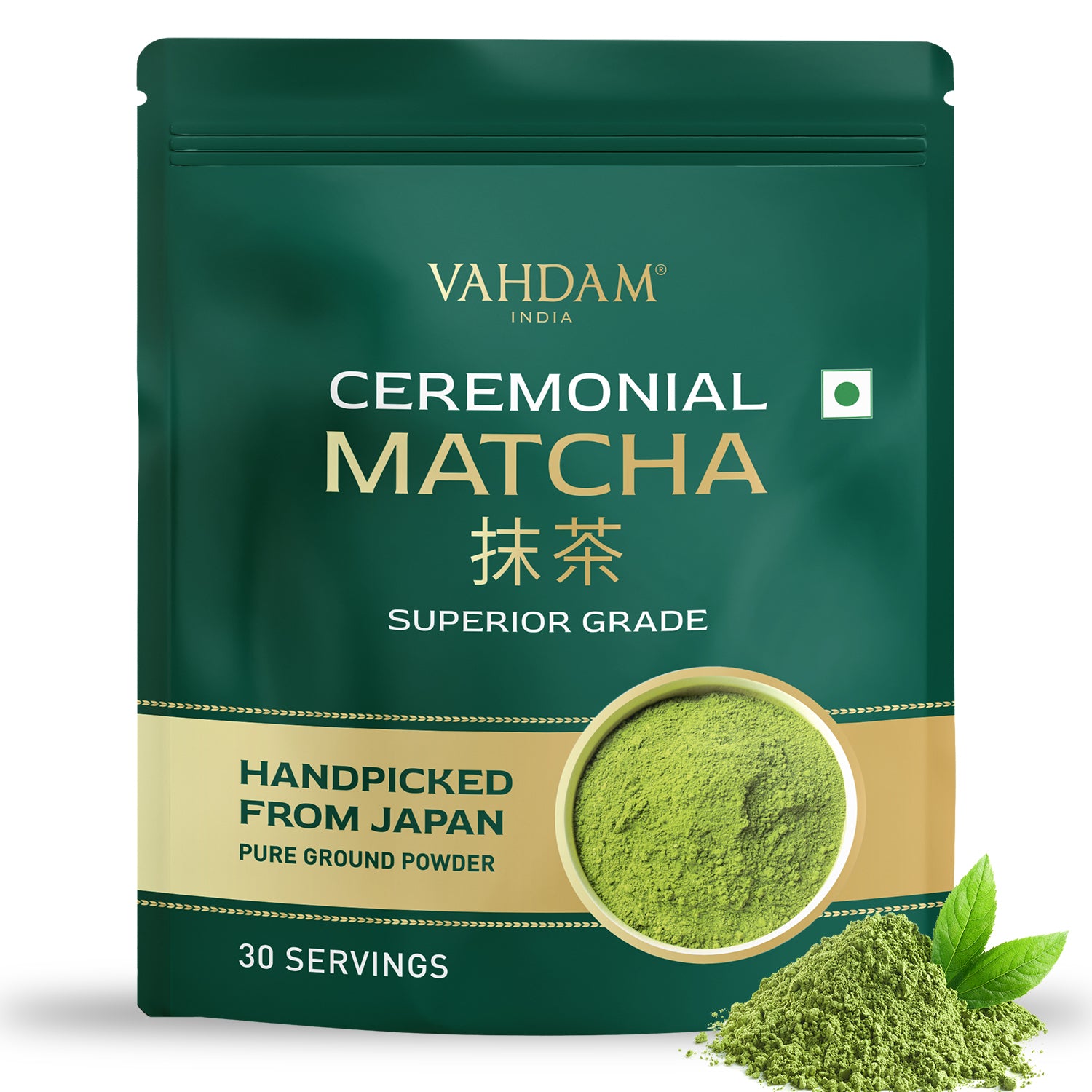
Matcha has gone from niche to everywhere: the café menu, the smoothie bar, the shelf in your kitchen. But the boom has a downside: a lot of what gets sold as matcha is dull, flat, and bitter, and it's given plenty of people a poor first impression. Here's the thing worth knowing before you buy: with matcha, quality isn't a nice-to-have. It's the whole story. Great matcha and mediocre matcha barely taste like the same drink.
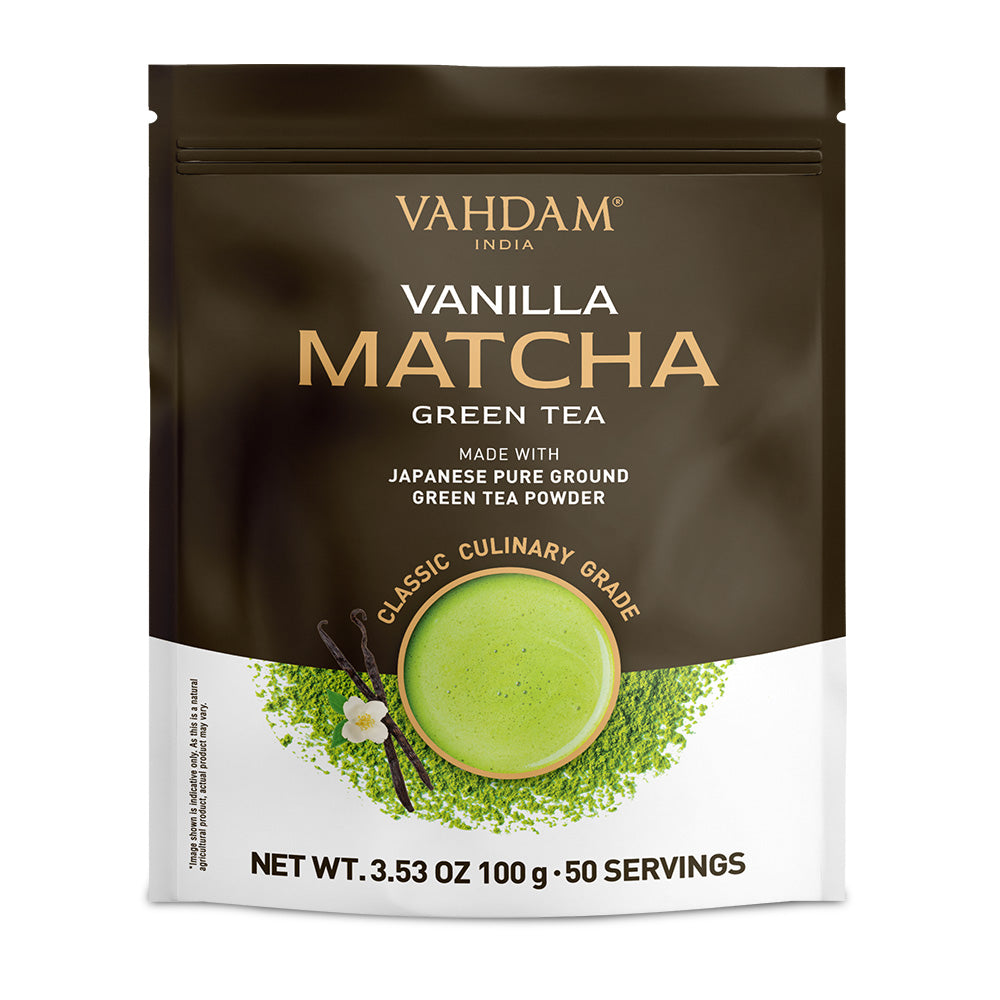
What's on this page is Japanese matcha in three forms: a ceremonial grade meant for drinking straight, a pure culinary grade for everyday lattes, smoothies, and baking, and a vanilla-flavoured option for an easier, sweeter cup. It's all finely ground green tea powder, packed in resealable zipper pouches so it holds its colour and flavour once you've opened it. Where it comes from and how it's made sits further down the page; up here, what matters is the cup: a smooth, savoury umami depth, a natural sweetness, and that vivid green colour that signals freshness.
Flavour-wise, good matcha tastes like steamed greens and fresh grass, with a creamy body, a gentle toasted sweetness, and a clean vegetal finish. There's a whisper of bitterness in there, but in quality matcha it's balanced rather than sharp. It's for the curious coffee drinker chasing a calmer kind of energy, the latte lover, the home baker, and anyone who wants a daily ritual with a bit of ceremony to it. Drink it traditional and straight, whisk it into a latte, blend it into smoothies, or bake it into something. Matcha is as versatile as it is distinctive.
Why Pick VAHDAM Matcha?
You already know the headline benefits: matcha is rich in antioxidants, it's linked to metabolism and a gentle, sustained energy, it's a staple of wellness routines. All true, all repeated on every matcha pouch on the shelf. The more useful question is what makes one matcha genuinely better than the next, because that's where most of the difference lives:
- Sourced directly from Shizuoka, one of Japan's largest and most respected green-tea regions, and shade-grown before harvest: the leaves are covered for weeks in the run-up to picking, which lifts chlorophyll and L-theanine and gives matcha its deep green colour and mellow, savoury flavour.
- The ceremonial grade is made from tender first-harvest leaves, then stone-ground in small batches, the slow traditional way, for a fine, silky powder that whisks smooth instead of clumping into grit.
- Vibrant green colour as a freshness marker: bright jade means fresh and well-made; dull or yellowish-brown is a sign matcha is old, oxidised, or a lower grade.
- Blended and packed in a facility that meets cGMP standards for dietary supplements (21 CFR Part 111), then sealed in resealable zipper pouches that protect colour and aroma once opened.
- A smooth umami finish rather than the harsh, chalky bitterness that puts people off cheap matcha.
- Built for both worlds: a traditional whisked bowl and modern lattes, smoothies, and baking.
What Makes Matcha Different From Regular Green Tea?
They start from the same plant, and both are green tea in the broad sense, but the way you consume them changes everything. With regular green tea you steep the leaves and throw them away, drinking only what is infused into the water. With matcha, the whole leaf is ground into powder and whisked right into the liquid, so you're drinking the entire leaf. Here's how that plays out side by side:
| Aspect | Matcha | Regular green tea |
|---|---|---|
| What you drink | The whole leaf, ground to powder and whisked into the liquid | Only the infusion; the leaves are steeped, then thrown away |
| Concentration | Far more concentrated in flavour, colour, and nutrients | Lighter; you get only what steeps out of the leaf |
| Texture & body | Creamy, full, almost frothy when whisked | Light and watery by comparison |
| Preparation | Sifted and whisked into a smooth suspension | A simple steep and strain |
| Flavour | Deeper and layered: umami, sweetness, vegetal richness | Fresher and simpler, lighter on the palate |
| Caffeine & feel | More caffeine, but L-theanine slows the release for calm, steady alertness | A gentler lift overall |
| In the kitchen | Blends into lattes, smoothies, and baking | Best as a steeped drink, not suited to cooking |
Understanding Matcha Grades, and What's Best for Your Needs
The word 'grade' trips a lot of people up. It isn't strictly good-better-best. It's more about what each type is made for. Buy the grade that matches how you'll actually drink it and you'll be much happier with the result. Here's the quick overview:
| Grade | Best for | Taste in the cup | On this page |
|---|---|---|---|
| Ceremonial | Drinking straight, whisked with hot water | Smoothest, soft sweetness, very low bitterness | Ceremonial Matcha, 30 g |
| Culinary (pure) | Lattes, smoothies, baking, everyday use | Stronger and robust; cuts through milk | Pure Japanese Matcha, 50 g |
| Flavoured | Sweeter lattes and blended drinks; easy first cups | Sweeter, softer umami, very approachable | Vanilla Matcha, 50 g |
Ceremonial Grade Matcha
This is the top tier, made for drinking straight, whisked with just hot water and nothing else. It comes from the youngest, most tender first-harvest leaves, which is why it's the smoothest and most refined: softer sweetness, a gentle umami finish, and very little bitterness, all wrapped in a vibrant green colour. If you want to drink matcha the traditional way and actually taste what the fuss is about, this is the one. It works in a latte too, but you're paying for a delicacy that milk and syrup partly cover up. On this page, that's our Ceremonial Grade Matcha.
Culinary Grade Matcha
Made to hold its own against other ingredients. Culinary matcha has a stronger, more robust flavour, which is exactly what you want when it's competing with milk, sugar, or the heat of an oven. It's the best matcha for baking (cakes, cookies, brownies) and for smoothies, and it's a workhorse for lattes where you want the matcha flavour to punch through. Drinking it neat is possible but it'll taste more assertive and a touch more bitter than ceremonial. This is your everyday, use-it-generously grade. On this page, that's our Pure Japanese Matcha, a 100% pure matcha from Shizuoka.
Flavoured Matcha
The friendly on-ramp. Flavoured matcha is a little sweeter and lower in the intense umami that first-timers sometimes find challenging, so it's easy to enjoy from day one. It's lovely in baking and blended drinks, and it keeps matcha's benefits intact for people who like the idea of matcha more than the pure, grassy taste of it. A genuinely good gateway before you graduate to a straight ceremonial bowl. On this page, that's our Vanilla Matcha.
Which Matcha Is Best for Beginners?
If you mainly want lattes and smoothies, start with a culinary or flavoured matcha, like our Pure Japanese Matcha or Vanilla Matcha, since they're more forgiving, taste great with milk, and cost less while you're learning. If you're curious about drinking matcha traditionally, a ceremonial grade is worth it, because a smooth, low-bitterness cup is a far better first impression than a harsh one that convinces you you don't like matcha.
One practical note on caffeine: matcha is stronger than steeped green tea, so if you're sensitive, ease in with a smaller amount (half a teaspoon) and see how you feel before making it a daily habit. The L-theanine tends to keep the energy calm and even, but it's still a proper lift.
What Does Matcha Actually Taste Like?
Good matcha tastes like nothing else in the tea world, which is part of the appeal. The signature note is umami, that savoury, almost broth-like depth you don't expect from a green drink. Around it sit fresh, steamed-greens and vegetal flavours, a creamy body that coats the mouth, and a soft toasted sweetness on the finish. Some people pick up a marine, sea-fresh quality too, especially in higher grades.
There's a touch of bitterness, and how much depends almost entirely on the grade and how you prepare it. In quality matcha it's a balancing note, not the main event: the sweetness and umami carry the cup. If your matcha tastes aggressively bitter or chalky, that's usually the powder or the preparation talking, not matcha itself.
Why Does My Matcha Taste Bitter?
Bitter, chalky matcha is common and almost always fixable. A few things drive it:
- Water too hot: Boiling water scorches matcha and pulls out sharp bitterness, and this is the most frequent mistake by far.
- Poor-quality or old matcha: Dull, yellowish powder has usually oxidised and lost its sweetness, leaving mostly bitterness behind.
- Too much powder: Over-scooping crowds the cup with bitter intensity and no balance.
- Oxidation from air, light, or heat exposure once the pouch has been opened.
Quick fixes: let your water cool to around 70–80°C before whisking, use a fresh, vividly green matcha, measure a modest amount (half to one teaspoon), sift the powder to avoid clumps, and press the air out of the pouch and reseal it after each use. Small changes; a big difference!
How to Prepare Matcha Properly at Home
Matcha isn't steeped, it's suspended, so you whisk the powder into the water rather than soaking leaves. Once you've got the rhythm it takes about a minute, whichever grade you're using.
- Sift first: push 1–2 teaspoons of matcha through a small sieve into your bowl or cup. This one step is the difference between silky and lumpy: sifting breaks up the clumps before water ever hits the powder.
- Water Temperature: 70–80°C, not boiling. Boiling water is the fast track to bitterness. Boil the kettle, then let it sit for a few minutes.
- Traditional method: add a little hot water to the sifted matcha and whisk briskly in a 'W' or 'M' motion with a bamboo whisk (a chasen) for 15–30 seconds, until you get a smooth, frothy top. Then top up with more hot water.
- Bowl and whisk: a wide bowl (chawan) gives the whisk room to move; the bamboo whisk aerates the matcha for that classic froth. A small electric frother works in a pinch if you don't have a chasen.
- Matcha latte method: whisk the matcha smooth with a splash of hot water first, then pour over milk (dairy or plant), hot for a warm latte or over ice for an iced one. Frothing the milk makes it feel café-made.
- Sweetener pairing: a little honey, maple, or vanilla rounds a latte off nicely, especially with culinary or flavoured grades. Add it to the matcha paste so it dissolves evenly.
- Iced version: whisk the matcha with a small amount of cool water until smooth, then pour over a full glass of ice and top with cold water or milk. Stir well, since matcha loves to settle.
Beginner mistakes to skip: using boiling water, skipping the sift so it clumps, and over-scooping. Nail the sift, the temperature, and a sensible amount of powder, and even your first bowl will come out smooth.
How We Source Our Matcha
Matcha is unforgiving of shortcuts, so the sourcing detail matters. Our matcha is sourced directly from Shizuoka, one of Japan's largest and most respected green-tea regions. The leaves are shade-grown in the weeks before harvest, a labour-intensive step that deepens the colour and builds the sweet, savoury, low-bitterness profile that defines good matcha, and the ceremonial grade is made from tender first-harvest leaves.
After picking, the leaves are stone-ground in small batches rather than blitzed at speed, because grinding fast generates heat that dulls both flavour and colour. Packaging is treated as part of the quality chain, not an afterthought: matcha is a fine powder that oxidises and fades faster than whole-leaf tea, so it's sealed in resealable zipper pouches that keep out air and light and hold that jade-green vibrancy after you open it. It's also blended and packed in a facility compliant with cGMP standards for dietary supplements (21 CFR Part 111).
On the choice of source: the aim was a matcha that balances sweetness, body, and low bitterness, with an eye on how well it holds up in the milk-based, latte-style preparations so many people like to have it daily. A matcha that's beautiful straight but disappears in a latte isn't the right pick for the way most of us actually drink it.
How Customers Like to Drink Our Matcha
- Iced strawberry matcha: whisk matcha, layer over milk and muddled fresh strawberries, pour over ice.
- Coconut matcha smoothie: blend matcha with banana, coconut milk, and ice for a creamy morning cup.
- Matcha overnight oats: stir a teaspoon of matcha into oats and milk, refrigerate overnight, top with fruit.
- Matcha chia pudding: whisk matcha into milk, mix with chia seeds, chill until set.
- Matcha desserts: fold culinary matcha into cakes, cookies, or brownies for colour and a gentle green-tea note.
- Matcha yogurt bowl: swirl matcha into thick yogurt and finish with granola, honey, and berries.
Frequently Asked Questions About Matcha
What is ceremonial grade matcha?
It's the highest grade, made from the youngest, most tender first-harvest leaves and meant to be drunk straight, just whisked with hot water. That's why it's the smoothest and least bitter, with a softer sweetness and vibrant colour. If you want to drink matcha traditionally, this is the grade to reach for.
Is matcha stronger than coffee?
It depends on how you make it, but a good bowl of matcha carries a real dose of caffeine. The difference is the feel: matcha's L-theanine slows the caffeine's release, so instead of a coffee-style spike and crash you tend to get a calmer, steadier, longer alertness. Different energy, not necessarily weaker.
Does matcha taste bitter?
Quality matcha shouldn't taste harshly bitter: it should be smooth, savoury, and gently sweet with just a hint of bitterness for balance. If yours is aggressively bitter, it's usually water that was too hot, too much powder, or an old, low-grade matcha rather than matcha itself.
Can beginners drink matcha daily?
Yes, plenty of people do. If you're new to it or caffeine-sensitive, start with a smaller amount (around half a teaspoon) and build up as you find your comfort level. A flavoured or culinary grade in a latte is a gentle way to make it a daily habit.
How should matcha be stored?
Airtight, cool, and away from light and heat. The resealable zipper pouch it comes in is ideal: press out the air and seal it after each use, keep it somewhere cool and dark, and use it within a few weeks of opening for the best colour and flavour. Matcha is a fine powder and oxidises quickly once it's exposed to air.
What's the difference between matcha and green tea?
Regular green tea is steeped and the leaves are discarded, so you drink only what infuses into the water. Matcha is the whole leaf ground to powder and whisked into the liquid, so you consume the entire leaf, making it far more concentrated in flavour, colour, and nutrients, with a creamy body green tea doesn't have.
Can I use ceremonial matcha for lattes?
You can, and it'll taste great, but it's a bit of a waste. Ceremonial grade is a delicate thing best appreciated on its own, and milk and sweetener mask much of what you're paying for. For lattes, a culinary or flavoured grade is designed to cut through milk and usually the smarter choice.
Why is high-quality matcha bright green?
The vivid jade colour comes from shade-growing before harvest, which boosts chlorophyll, and from fresh, careful stone-grinding. It's a reliable freshness marker: bright green signals a good, fresh matcha, while dull, yellowish, or brownish powder points to an older, oxidised, or lower grade.
How much caffeine is in matcha?
More than steeped green tea, because you're drinking the whole leaf, though generally still less per serving than a strong coffee depending on how much powder you use. The standout feature is the calm, sustained lift from the caffeine and L-theanine working together, rather than the size of the caffeine hit.
Why does some matcha clump?
Matcha is an extremely fine powder, so it naturally clumps as it sits, especially with any moisture around. The fix is simple: sift it through a small sieve before adding water, and whisk briskly. Sifting first is the single best habit for a smooth, lump-free bowl.
Show Us Some Love On